
Smart and electronic locks: convenience versus security
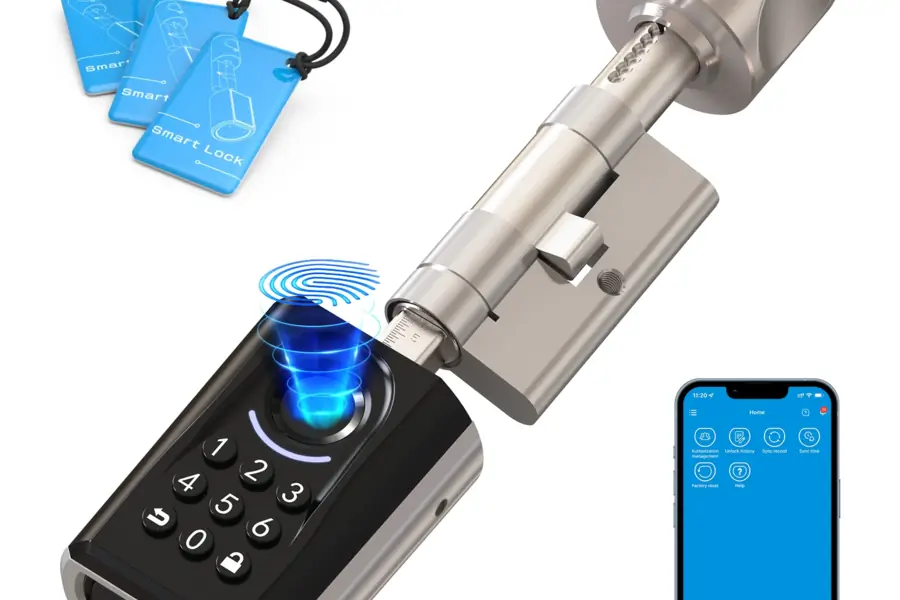
Opening a door with your phone, a code or a fingerprint instead of searching for keys sounds tempting. Smart and electronic locks make it possible and are appearing in homes and companies. But convenience must be balanced with security. Let us explain how they work and what to keep in mind.
What an electronic and smart lock is
- An electronic lock opens differently than with a classic key, most often by code, card or fingerprint. It works on its own.
- A smart lock is an electronic lock connected to a network that you also control remotely via an app, link with a smart home and see the history of openings.
What types exist
- Code lock. Opens by entering a PIN. Simple, but the code needs changing occasionally.
- Card or chip. By tapping a card or fob, similar to an access system.
- Biometric. A fingerprint, convenient and hard to transfer.
- Phone-controlled lock. Via Bluetooth or the internet, with remote control.
- Combined. Several methods at once, plus a backup classic key.
Advantages
- Convenience. No searching for and losing keys.
- Remote control. You open for a visitor or courier even when you are not home.
- Temporary access. A code or time-limited access for a cleaner, guest or tradesperson.
- History of openings. You see who entered and when.
- No lock replacement on loss. Just revoke the access.
Risks and what to watch for
Convenience must not come at the cost of security. Watch for:
- Power. The lock runs on batteries or mains. Address what happens when it drains or there is an outage (backup key, emergency power).
- Quality and brand. Cheap no-name locks tend to be poorly secured. It does not pay to save on a lock.
- Network security. A smart lock is an IoT device, so it belongs in a secured and separated network and needs strong passwords and updates.
- Mechanical resistance. Even a smart lock must withstand physical force, not just digital.
- Cloud dependence. Consider whether you can get in even when the internet or the manufacturer’s service goes down.
Who it suits
- Households that want convenience and an overview.
- Rentals and accommodation, where guests change and temporary codes are useful.
- Companies and venues in combination with an attendance and access system.
Conclusion
Smart and electronic locks bring convenience, remote control and an overview of entries. So that this convenience does not come at the cost of security, you need to choose a quality lock, address power and outages and connect it to a secure network. Then it is a great upgrade.
Considering a smart or electronic lock at home or in your company? Get in touch, we will advise on the choice and secure setup.
Considering a smart lock for your home or business?
We will help you choose the right lock, connect it to a secure network and link it with your smart home. For households and companies across the Liptov region.
Get in touchThis article is part of our Cybersecurity overview.
Frequently asked questions
Is a smart lock safer than a classic key?
What happens during a power cut or a dead battery?
Does a smart lock work without internet?
Can a smart lock be hacked and unlocked remotely?
Is a smart lock worth it for a rental or Airbnb?
How long does a smart lock's battery last?
Need help with IT?
We will take care of your computers, networks and security - for businesses and households in the Liptov region.
Contact us