
Serial line: RS-232, RS-422 and RS-485 and where they are used
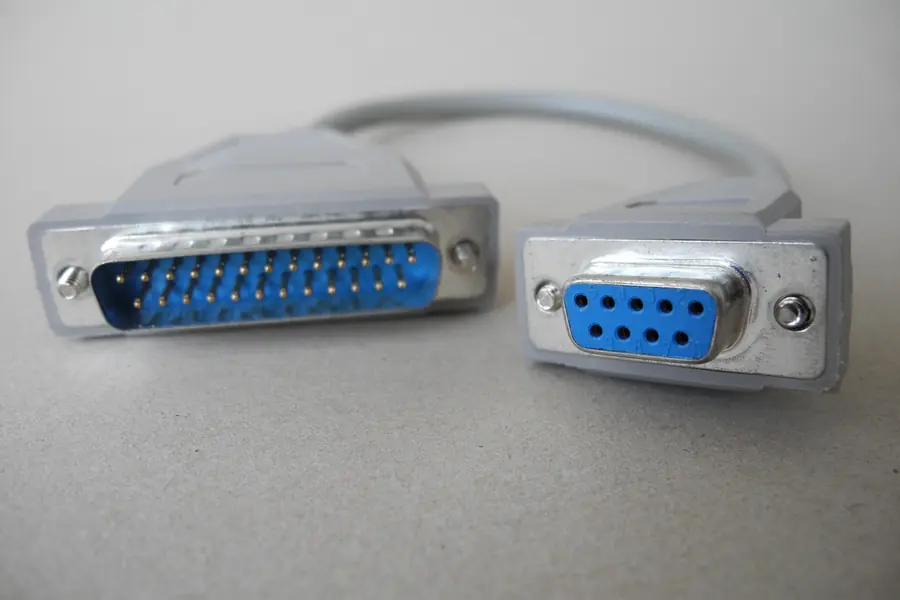
The serial line sounds like a term from the past, but in networks, industry and service it is alive today. Through it, switches, routers and industrial devices are configured. Let us explain in detail what serial communication is, how it works, which standards (RS-232, RS-422, RS-485) there are and where they are used.
What serial communication is
Serial communication is a way of transferring data in which individual bits go one after another, one by one, over a single wire. The opposite is parallel transfer, where several bits go at once over several wires. Serial transfer is simpler, more reliable over longer distances and gets by with few wires.
RS-232 is the best-known serial communication standard, which defines the voltages, wiring and the way of transfer. You meet it under the names serial port, COM port or console port.
How the serial line works
Imagine it as a narrow tunnel through which only one bit passes at a time. For both sides to understand each other, they must agree on the rules:
- Speed (baud rate). How many symbols per second are transferred, for example 9600 or 115200. Both sides must have the same speed, otherwise they do not understand each other.
- Data bits. How many bits form one character, most often 8.
- Parity. A simple error check, often disabled (none).
- Stop bits. Marking the end of a character, usually 1.
A common setting is written for example as 9600 8N1 (9600 baud, 8 data bits, no parity, 1 stop bit). When these values match on both sides, communication works.
What the serial line is still used for
Although the serial port has almost vanished from ordinary computers, in these areas it is irreplaceable:
- Configuring network equipment. Switches and routers (especially managed ones) have a console port through which they are configured, when they do not yet have a network or when remote access fails. For a network administrator it is a basic tool.
- Industrial and control systems. Machines, automatons, measuring and control devices often communicate over a serial line.
- Embedded systems and electronics. When developing and debugging devices (including Arduino and ESP32), the serial line is a standard way of communication.
- Service and diagnostics. When repairing or initially setting up a device that is otherwise inaccessible.
- Older devices (cash registers, scales, some instruments) that have no other port.
Not just RS-232: RS-422 and RS-485
RS-232 is the best known, but not the only serial standard. The decisive difference is in how the signal is transmitted (electrically) and how many devices can be on one line:
- RS-232 transmits the signal single-ended (against ground), so it is sensitive to interference. It is meant for short distances (up to roughly 15 metres) and connecting one device to one (point-to-point). Typically: PCs, console ports, service.
- RS-422 transmits the signal differentially (over a pair of wires), so it is far more resistant to interference. It handles long distances (up to around 1200 metres) and higher speeds, but it is still one transmitter (with several receivers). It is used for long point-to-point links and in industry.
- RS-485 is also differential, but on top of that it allows a bus with several devices (typically up to 32 and more) on one line. That makes it the workhorse of industrial automation: sensor buses, control units (PLCs), buildings. Protocols such as Modbus RTU or Profibus run on it. The wiring is two-wire (half-duplex) or four-wire (full-duplex).
- The 20 mA current loop is an older but very robust way for long distances (even kilometres) in a noisy industrial environment.
Beware, these are different electrical standards. The framing rules (speed, data bits, parity) are similar, but you cannot directly connect devices with different standards (for example RS-232 and RS-485), you need a converter.
| Standard | Transmission | Distance | Devices | Typical use |
|---|---|---|---|---|
| RS-232 | single-ended | up to ~15 m | 1:1 | PC, console, service |
| RS-422 | differential | up to ~1200 m | 1 transmitter, several receivers | long links, industry |
| RS-485 | differential | up to ~1200 m | bus of 32+ | industry, Modbus, buildings |
| 20 mA current loop | current | km | 1:1 | robust industrial links |
Which one when: for configuring network devices and service RS-232, for industrial buses with several devices and long distances RS-485, for long point-to-point industrial links RS-422.
How to connect today
Modern laptops no longer have a serial port, so a USB-to-serial adapter is used. After connecting, a virtual COM port appears on the computer. For the communication itself, a terminal program (for example PuTTY) is used, where you enter the correct COM port and settings (speed, bits, parity). This relates to working in the command line and terminal.
With network devices, a specific console cable is often needed (often with an RJ45 connector on the device side).
What to watch for
- The same setting on both sides, otherwise you see only gibberish. The most common mistake is the wrong speed (baud rate).
- The correct COM port on the computer (check in Device Manager).
- A quality adapter and drivers, cheap USB adapters sometimes cause problems.
Conclusion
Serial communication transfers data bit by bit and, besides the best known RS-232, also includes the industrial RS-422 and RS-485. Although the serial port has disappeared from ordinary computers, in networks, industry and service it is still key. Switches and routers are configured through the console port, industrial devices talk over the RS-485 bus. You just need to know the right standard and settings (for example 9600 8N1) and have a USB adapter.
Need to configure a switch, router or industrial device via the serial line? Get in touch, we have the tools and experience for it.
We configure your network and industrial equipment over serial
We set up switches, routers or industrial devices even where remote access fails. For households and companies across Liptov.
Get in touchThis article is part of our Computer networks overview.
Frequently asked questions
What is a serial line and what is it used for?
What does the 9600 8N1 setting mean?
What is the difference between RS-232, RS-422 and RS-485?
Why do switches and routers still have a serial console port?
How do I connect to a serial port today, since laptops no longer have one?
Can I directly connect an RS-232 device to an RS-485 device?
Need help with IT?
We will take care of your computers, networks and security - for businesses and households in the Liptov region.
Contact us