
PoE: one cable for a camera and a Wi-Fi point
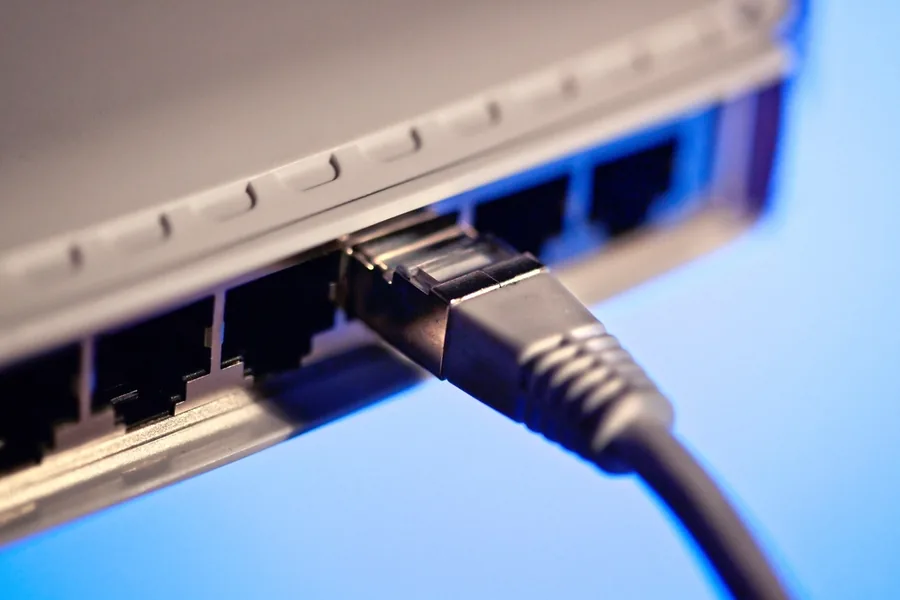
A camera on the corner of the house or a Wi-Fi point on the ceiling, where there is no power socket. Normally you would have to run both electricity and a network cable there. PoE solves this with a single cable, which is exactly why it has become the standard for cameras and networks.
What PoE is
PoE (Power over Ethernet) means that a single network cable carries both data and electrical power at once. The device at the end of the cable therefore needs no socket or adapter of its own; power reaches it over the same cable as the internet.
Where it fits
You appreciate PoE everywhere it is hard or expensive to bring power:
- IP cameras on a facade, under a roof or on a pole,
- Wi-Fi access points on a ceiling or wall (the basis of good mesh coverage),
- IP phones and other network devices.
One cable is enough and you place the device practically anywhere you can run it to.
What the benefits are
- One cable instead of two and no socket right next to the device.
- Freedom of placement up to 100 metres from the switch.
- Convenient management: you can turn the device off and on (restart it) remotely from the switch, without walking over to it.
Standards and how many watts they deliver
PoE has several versions that differ in how much power they can deliver. The figure at the source (the switch) is higher than what actually reaches the device, because part of the energy is lost over a long cable:
- 802.3af (classic PoE): the source delivers about 15 W, around 12.95 W reaches the device. Enough for ordinary cameras and IP phones.
- 802.3at (PoE+): the source delivers up to 30 W, around 25.5 W to the device. Suitable for pan-tilt-zoom (PTZ) cameras and more powerful access points.
- 802.3bt (PoE++): the strongest class, the source delivers around 60 W (Type 3) or up to 90 W (Type 4). It powers even demanding devices, displays or multi-antenna Wi-Fi points.
Devices are also sorted into power classes (0 to 8). Based on the class, the switch knows how much power to reserve, so it does not waste energy on a device that does not need that much.
What you need for it
Something has to supply the power into the cable. Either a PoE switch (a hub that powers all connected devices at once, handy when you have several PoE devices), or a small PoE injector that adds power to a single cable (a cheaper option for one or two devices). The device at the other end must support PoE, which cameras and access points commonly do today. Both power and data reach up to 100 metres over a single ethernet cable.
When choosing a switch, watch the total watt budget. A switch has one shared power reserve for all ports (the so-called power budget). If, for example, it has a 65 W budget and you connect eight cameras at 10 W each, that is 80 W together and the switch will not power further devices. That is why the switch and the devices need to be matched on power, and that is exactly what we can help with.
Planning cameras or proper Wi-Fi coverage?
We will design the wiring and PoE power so a single cable reaches every device and everything works the first time. For homes and businesses in the Liptov region.
Design my wiringThis article is part of our Computer networks overview.
This article is part of our Camera systems overview.
Frequently asked questions
What is PoE and how does it work?
What is PoE most often used for?
How far does PoE reach?
How many watts does PoE deliver?
Do I need a PoE switch or is an injector enough?
What is the power budget of a PoE switch?
Need help with IT?
We will take care of your computers, networks and security - for businesses and households in the Liptov region.
Contact us