
Cisco, Meraki and the rest: who is who among network brands
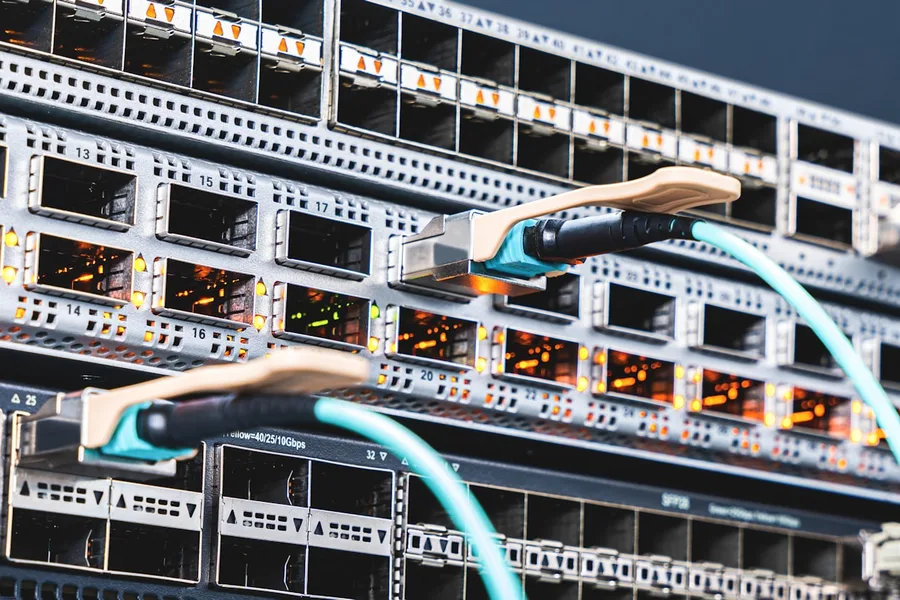
In the world of computer networks there is one name even someone outside the field knows: Cisco. It is a brand that a large part of the internet literally runs on. A whole ecosystem of other makers revolves around it, from cheap home gear to enterprise giants. Let us make sense of who is who, and start with the biggest player.
Who Cisco is
Cisco is an American company founded in 1984 in California. Over the decades it grew into the largest maker of networking technology in the world, and its equipment forms the backbone of the internet, of telecom operators and of the largest corporations. Where enormous volumes of data flow and downtime is not an option, Cisco is very likely behind the scenes.
The brand comes with its own operating system and a whole range of products, from enterprise switches and routers to data-centre solutions. Cisco is also the benchmark in education: its certifications are so respected in the field that the saying goes, if you can run Cisco, you know networking. It is, in short, the gold standard everyone else measures themselves against.
Why Cisco is the gold standard (and what it costs)
Cisco’s reputation rests on reliability, enormous capabilities and worldwide support. Its technology runs networks that cannot afford a single minute of downtime, and customers gladly pay extra for that certainty. For a bank, an operator or a large company it is a sensible investment.
The other side of the coin is the price. Cisco devices are expensive, and their cost is often joined by licences and support contracts, without which you have no right to updates and support. For an environment where an hour of downtime costs thousands, that makes sense. For an ordinary company or home, however, it is an expensive tool from an entirely different world, whose capabilities they will never use.
Cisco Meraki: cloud instead of the command line
Cisco also has a second, quite different face, and that is the Meraki brand. While classic Cisco is configured directly on the devices and requires an experienced expert, Meraki is built on cloud management. You manage the whole network, including many branches in different places, from a single web dashboard remotely. You see everything at once and a change is reflected anywhere.
For companies with several premises that is enormous comfort. But it has one fundamental caveat you should know in advance: Meraki runs on mandatory licences. A device needs a valid licence to operate, and when the licence expires the network eventually can no longer be managed. So it is not a one-off purchase but an ongoing cost over the whole life of the network, plus a dependence on the maker’s cloud being available.
Cisco versus Meraki in brief
They are two worlds of the same company:
| Classic Cisco | Cisco Meraki | |
|---|---|---|
| Management | directly on the device, an expert | cloud dashboard, remotely |
| Philosophy | maximum control and options | simplicity and an overview |
| Costs | device plus support | device plus mandatory licences |
| Suits | large networks, operators | companies with several branches |
Who is who among the other brands
Cisco is not alone. The market is varied and every brand has its place. Here is a brief overview of the ones you will run into most often:
- MikroTik is the master of value for money. For little money it offers a huge set of features, but it demands knowledge. We devoted a separate article to it.
- Ubiquiti is built on simple central management and nice design. It is popular with companies that do not have their own IT team, and it also has its own portrait here.
- Aruba (under HPE’s wing) is Cisco’s main rival in enterprise WiFi networks. It offers a similar enterprise level, including cloud management, and belongs to the top of the large-company segment.
- Huawei is a Chinese giant with excellent value for money, extremely strong in telecommunications and enterprise networks. It should be noted factually that in a number of countries it faces restrictions on deployment in critical and telecom infrastructure for security and geopolitical reasons.
- TP-Link is a very widespread and affordable brand for homes and smaller premises. For basic home use and budget deployments it does the job, but for a serious business network we reach for more robust solutions.
- D-Link is a similarly long-standing budget brand aimed at homes and smaller companies, where the main criterion is a low price.
- Zyxel aims mainly at small and medium businesses: alongside switches and WiFi it also offers gateways and firewalls (the USG and ZyWALL lines) and Nebula cloud management. It is a practical middle ground for companies that want more than a home router but do not need enterprise gear.
- Netgear is known mainly to households (the Orbi mesh), but it also has switches and WiFi for smaller companies with Insight cloud management.
Summed up clearly:
| Brand | What it is typically |
|---|---|
| Cisco / Meraki | the benchmark for large companies and operators, expensive |
| Aruba (HPE) | Cisco’s rival in enterprise WiFi networks |
| MikroTik | price, performance and flexibility for professionals |
| Ubiquiti | simple central management for companies without an IT team |
| Huawei | excellent value for money, strong in telecommunications |
| TP-Link / D-Link | budget brands for homes and smaller premises |
| Zyxel / Netgear | for small and medium businesses, with cloud management |
And that is far from all
Far more makers work on networks than fit into a single overview, and each has its niche. So you do not get lost in the names, here is a rough sorting by where you will most often run into them:
- Large companies and data centres: alongside Cisco and Aruba there are Juniper, Arista (a top name in data centres), Extreme Networks, Ruckus (strong in WiFi for hotels and halls), as well as Dell and H3C.
- Operators and telecommunications: the backbone of large networks is also built by Nokia and Ericsson, alongside the already mentioned Huawei.
- Wireless links and smaller operators: besides MikroTik and Ubiquiti there are Cambium Networks and the industrial and cellular routers from Teltonika.
- Smaller companies and homes: alongside TP-Link, D-Link, Zyxel and Netgear you will also find Draytek, EnGenius, Grandstream (which combines networking with telephony), ASUS, Linksys and the budget Tenda and Mercusys.
And even this list is not complete, there are literally dozens of makers. That is exactly why we do not fixate on a single brand but on what the network has to deliver. A good technician is at home in several of these worlds and picks the one that gives you the best balance of price, reliability and easy management.
Firewalls and security: one more world of brands
A separate chapter belongs to makers focused on security and firewalls, meaning the devices that guard the border between your network and the internet. It is a world of its own with big names:
- Palo Alto Networks is among the absolute top in enterprise next-generation firewalls (so-called NGFW), which not only filter traffic but also understand the applications and threats within it. It is a premium solution for companies that take security very seriously.
- Fortinet, with its FortiGate line, is one of the most widespread firewalls of all, popular for its good balance of price, performance and features across small and large companies alike.
- Juniper Networks is a long-standing rival of Cisco in routers and switches for operators and data centres, with a strong presence in security too.
- Check Point and Sophos are other well-known names in enterprise security and firewalls.
- For smaller and budget deployments there are also open-source solutions like pfSense and OPNsense, which turn an ordinary computer into a full-fledged firewall.
For an ordinary company or home, the firewall already built into the router or gateway (for example in MikroTik or Ubiquiti) is often perfectly enough. Specialised brands like Palo Alto or Fortinet make sense where security is critical and advanced protection, visibility and support are needed. Here too our rule applies: we deploy according to real need, not according to the loudest name.
Who Cisco and Meraki suit (and who they do not)
Cisco and Meraki are in their element where a network is large, critical or spread across many branches: corporations, operators, large companies with their own IT department and a budget for ongoing licences. In such an environment the investment in proven certainty pays off.
For an ordinary company, venue or home it is, on the contrary, usually needless luxury. You will build an equally reliable and clear network with more practical brands at a fraction of the cost and without mandatory subscriptions. Most of our customers in the Liptov region do not need an enterprise tool from another world, they need a network that works reliably and does not cost a fortune.
How we see it
We are not tied to any brand and have no reason to push a particular logo on anyone. We can service and work with Cisco and Meraki if you already have them in the company, but we do not usually recommend our customers buy them. Not because they are bad, quite the opposite, but because for most situations they are needlessly expensive and complex.
When we design a network, we start from your needs and budget, not from what is currently in fashion. For companies and homes the ones that have proven themselves most in practice are more practical solutions like MikroTik and Ubiquiti, the differences between which we covered in the article MikroTik versus Ubiquiti. And if anything else fits, we will say so straight.
Conclusion
Cisco is rightly the benchmark of networks and Meraki adds the comfort of cloud management to it. They are top-tier tools that hold up the backbone of the world’s largest networks. At the same time, the best on paper is not automatically the best for you. The brand is only the second question, the first is what you need from the network and how much you want to invest in it. And that is exactly what we are happy to help you with, impartially and without being tied to a logo.
Need help choosing a network?
We will design a network to measure, based on your needs and budget, impartially and without being tied to a single brand. For homes and businesses in Liptov.
I want a no-obligation designThis article is part of our guide to Computer networks.
Frequently asked questions
What is Cisco?
What is Cisco Meraki and how does it differ from classic Cisco?
Why is Cisco so expensive?
Is Cisco worth it for a small business or a home?
Does Meraki stop working without a licence?
Which network brand is the best?
Need help with IT?
We will take care of your computers, networks and security - for businesses and households in the Liptov region.
Contact us